Historical Summary
1. The Foundation of the Empire
Before the Foundation, humanity was scattered across several star systems, divided into rival factions engaged in constant conflict. This period of interstellar civil war threatened the very future of the human species.
It was then that the Council of Guardians appeared: five beings with human features but endowed with formidable intelligence and apparent immortality. Through diplomacy and the demonstration of their wisdom, they convinced several major factions to unite under their guidance, thus creating the Empire in Year 0.
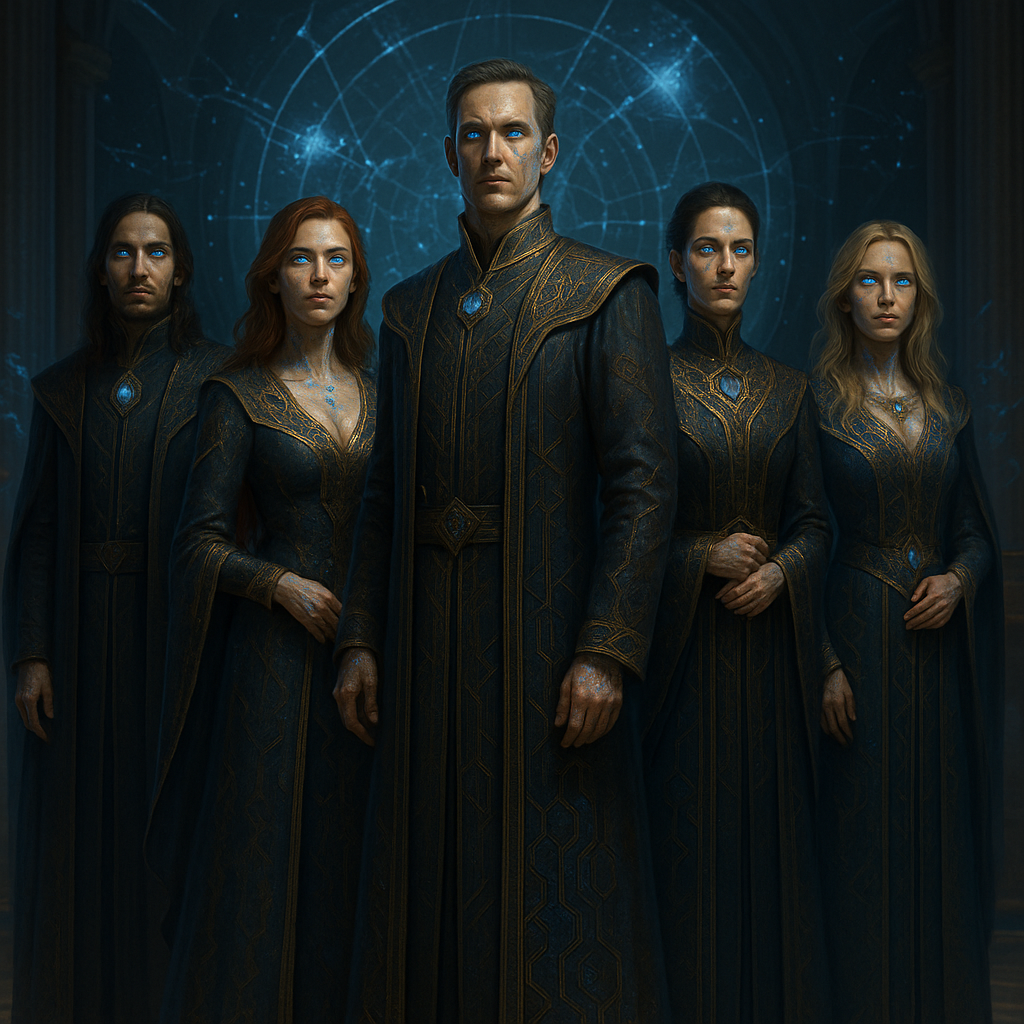
This unification marked the end of human civil wars and the beginning of an era of prosperity and coordinated expansion.
2. Expansion
After establishing solid foundations in their nearby systems, the Empire began to expand into space and encounter other isolated human groups. Led by the Council of Guardians, the humans of the Empire quickly positioned themselves as leaders during the first interstellar dialogues. Sérac, head of the Council, was very present during diplomatic encounters and made no secret of his desire to federate all human peoples under the imperial banner.
3. War with the Acéras
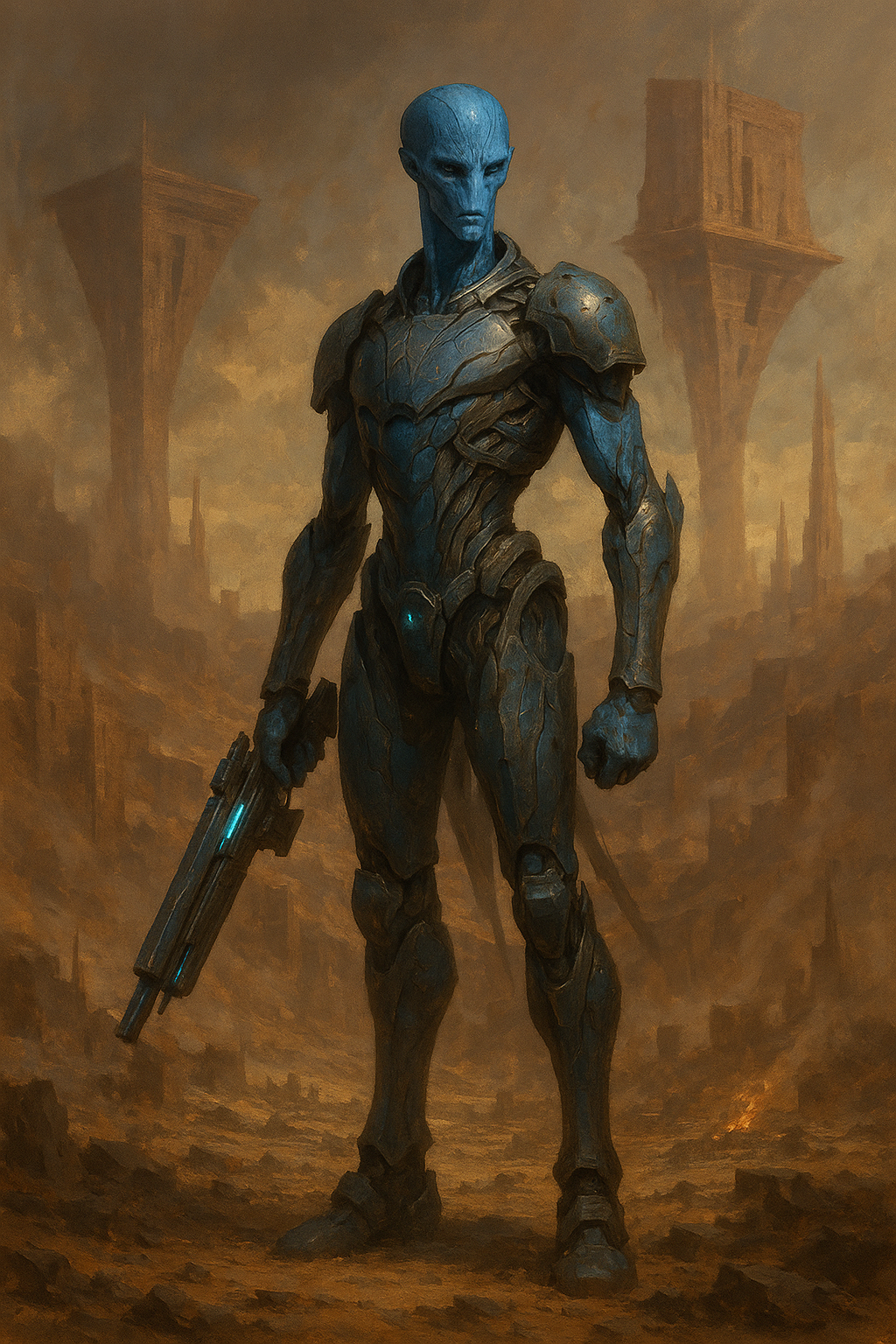
As the Empire continued its expansion and became the foremost geopolitical power, it came into contact with a telluric alien race: the Acéras.
Characteristics of the Acéras
The Acéras are tall beings but possess less physical strength than humans. Their civilization displays marked distinctive traits:
- Underground architecture: Their cities combine surface constructions with elaborate subterranean complexes. Their “skyscrapers” extend as far below ground as they rise above it.
- Comparable technology: Their technological level rivals that of the Empire, making the conflict particularly long and costly.
- Bellicose mentality: Convinced of their superiority and frightened by differences, they categorically refuse any negotiation with the Empire.
The Conflict
First contact immediately deteriorated into confrontation. The human-Acéras war lasted several centuries and unified the various human factions around a common objective: victory.
Losses were considerable on both sides, but this conflict shaped the civilizations that participated in it, forever inscribing them in galactic history as the first races to have built themselves around interstellar warfare.
The technological parity between the two civilizations explains the exceptional duration of the conflict, with each side constantly developing new strategies to counter the adversary.
4. The End of War (Current Context)
Campaign Period: Year 5755
Adventures take place in 5755, nine years before the signing of peace. This period corresponds to the final phase of the human-Acéras war, marked by a dramatic escalation of hostilities.
Current Military Situation
After more than two centuries of positional warfare and attrition, the conflict enters its deadliest phase. Both civilizations, exhausted by decades of fighting, understand that one of them must yield definitively. This last decade concentrates the majority of casualties of the entire war.
- State of forces: Technological parity maintained, but resources dwindling on both sides
- Strategy: Transition toward a “total” war where all means are mobilized
- Stakes: Each side knows this is the last chance for a decisive victory
- Mobilization: 3 to 5% of the imperial population is enlisted, an exceptional rate reflecting the urgency of the situation
Internal Political Tensions
This final escalation generates intense debates in the Imperial Assembly. Three major currents clash:
- Some support Sérac’s strategy, convinced that one last decisive offensive will bring victory
- Others demand the opening of peace negotiations, believing the human cost is already too high
- A third group agrees to continue the conflict on the condition of obtaining guarantees on duration and casualties
The Council, led by Sérac, maintains its course toward military victory by leveraging its political capital and its ability to navigate parliamentary divisions. Sérac promises the Assembly that the war will end within the next nine years - a prediction that will prove correct with the signing of peace in 5764.
Hero Missions
In this critical context, Heroes (Rank H) become essential for maintaining the Empire’s cohesion:
Direct military missions:
- Reconnaissance in contested territory
- Support for regular forces in combat zones
- Attack or defense of key strategic objectives
Imperial support missions:
- Securing resources against natural threats
- Fighting piracy and opportunistic factions
- Protecting aggressive ecosystems on resource worlds
- Logistical and commercial support between systems
With the regular army concentrated on the Acéras front, the Empire depends on its elite elements to ensure internal stability and maintain vital supply lines.
5. Beyond
The consequences of this war are numerous and complex. The peace signed in 5764 officially marks the end of hostilities, but the Acéras civilization, weakened by centuries of conflict, begins a slow decline that will lead to its gradual extinction in the centuries that follow.